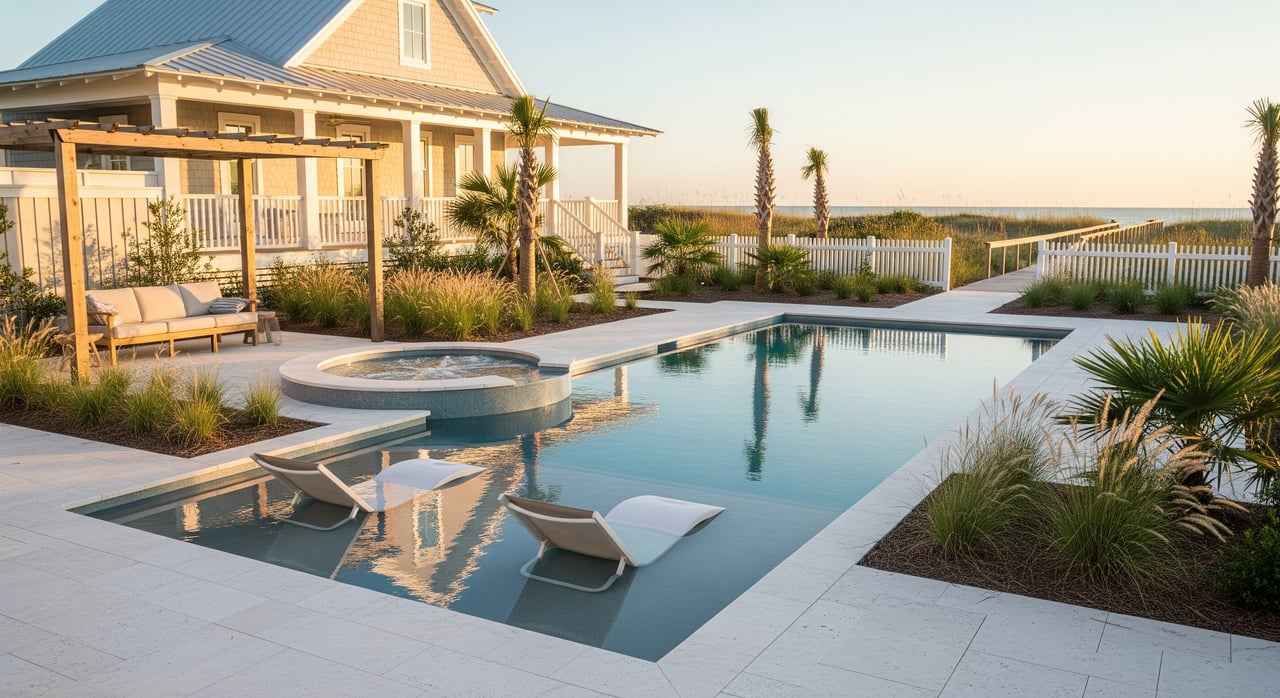
Thinking about adding a pool to your WaterColor home? It can elevate your coastal lifestyle and boost guest appeal, but the path from idea to first swim runs through community design rules, county permits, and coastal regulations. You want the process to be clear, compliant, and on schedule. This guide walks you through approvals, design constraints, costs, and a step-by-step checklist tailored to WaterColor. Let’s dive in.
Big picture: what it takes in WaterColor
You will work through two core approvals, often in parallel. First is the WaterColor Design Review Board, which must approve your pool and related exterior changes before work starts. Review the DRB process and timelines on the WaterColor community site to plan your submission and review dates. WaterColor’s Design Review Board overview explains responsibilities and how to get started.
Next is Walton County’s review. Projects go through Planning for site, drainage, and land development checks, then the Building Division issues permits and conducts inspections under the Florida Building Code. The county’s portal outlines what to submit and when. See the county’s Building Permit Review for planning steps.
If your lot is near the beach or within a flood zone, build in extra time. Coastal projects may trigger Florida’s Coastal Construction Control Line rules and floodplain requirements that affect design, elevation, and equipment placement. Get familiar with Florida DEP’s CCCL program early.
Step-by-step: approvals and permits
1) WaterColor DRB approval
The DRB reviews pools, spas, decking, equipment pads, lighting, and major landscaping. You will submit plans that show your pool location, setbacks, barrier concept, and any landscape changes. DRB agendas and deadlines drive timing, so contact the Design & Compliance team early. Start with the DRB main page to confirm submittal requirements.
2) Walton County planning review
Before a building permit, Walton County checks land development and stormwater details. Many owners schedule a pre-application to confirm setbacks, easements, and any wetland or dune-lake considerations. Use the county portal to upload your site plan and supporting documents. See Building Permit Review for the planning sequence.
3) Building permits and inspections
After Planning signs off, apply to the Building Division for a residential pool permit. Expect separate electrical and possibly plumbing permits for equipment. The county enforces the Florida Building Code and will inspect excavation, structure, bonding, equipment, and final safety features. Learn more on Walton County’s Permits page.
4) State coastal and floodplain conditions
WaterColor includes properties in FEMA flood zones and near the shoreline. Pools in flood hazard areas must meet floodplain requirements, and equipment is typically elevated above Base Flood Elevation. Check your property’s zone on Walton County’s FEMA Flood Zones page. If any work is seaward of the CCCL, additional permitting through Florida DEP’s CCCL is likely required.
Site and design factors that change your plan
Flood zones and high water table
In coastal Northwest Florida, groundwater and hydrostatic uplift are real concerns. Designs often incorporate engineering for buoyancy control and careful equipment siting. If your site has a high water table or sits in AE or VE zones, plan for an engineer’s input and possible geotechnical review.
Setbacks, easements, and neighbor impacts
Your pool must stay out of utility easements and respect property setbacks. WaterColor’s DRB and Walton County will both check your site plan. Confirm your plat and neighborhood rules early to avoid redesign.
Trees, lighting, and environmental rules
Major landscape changes can require separate approvals. Near the beach, lighting rules may affect fixture selection for turtle-friendly compliance. Review county ordinances during design to keep your plan on track.
Hurricanes and equipment anchorage
Equipment pads and any screen enclosures must meet coastal wind standards. Proper anchorage and siting are part of permit review. Your contractor should design and document these details for the Building Division.
Safety rules you must plan for
Florida’s Residential Swimming Pool Safety Act requires that new residential pools include approved safety features. Options include a compliant barrier and gates, door or window alarms, self-closing and latching doors, a safety cover, or pool alarms. The county verifies compliance at final inspection. Review Florida Statutes Chapter 515 to decide which solution fits your home.
Costs, timing, and ownership impacts
A new in-ground pool in Florida varies widely by size, features, and site conditions. Consumer guides place many projects in the tens of thousands of dollars, with common ranges around $30,000 to $80,000 or more for gunite, plus decking, landscaping, and add-ons like heaters and automation. See typical ranges in this Florida pool cost guide.
Once permits are in hand, many in-ground pools take about 6 to 12 weeks to build, depending on site and scope. Published guides often estimate 40 to 60 days for construction stages like excavation, shell, cure, decking, equipment, and startup. For a useful benchmark, review this overview of in-ground pool timelines.
Expect ownership impacts. Insurers commonly adjust premiums or liability coverage when you add an in-ground pool. On taxes, the Walton County Property Appraiser typically adds substantial improvements to assessed value the first January 1 after completion. See the Property Appraiser FAQs for assessment timing and how new construction is treated.
Your WaterColor pool checklist
- Feasibility and homework
- Confirm you are under WaterColor DRB and obtain the Design Guidelines and submittal checklist. Start with the DRB main page.
- Check your FEMA flood zone and Base Flood Elevation on the county’s FEMA Flood Zones page.
- Determine if your lot is affected by the CCCL through Florida DEP’s CCCL program.
- Request site visits and quotes from 2 to 3 licensed pool contractors. Verify state licensing and insurance. You can confirm classifications through the Florida Swimming Pool Association licensing guidance.
- Design and engineering
- Engage an engineer early for flood or high water table conditions. Plan drainage and stormwater per county expectations.
- Choose your safety solution now so plans and hardware meet Florida Statute Chapter 515 at final inspection.
- Submittals and permits
- File your DRB package with site plan, pool layout, equipment location, lighting, and landscaping details.
- Submit Walton County Planning materials, then apply for Building Division pool, electrical, and any plumbing permits using the county Permits portal.
- Construction and inspections
- Typical inspection sequence includes underground piping, structural shell, equipment and bonding, and final safety features. Build time often falls in the 6 to 12 week range once you break ground.
- Startup and ownership
- Plan for ongoing maintenance, utilities, seasonal needs, and any heater choice. Check insurance and discuss assessment timing with your agent and the Property Appraiser resources.
Common pitfalls to avoid
- Skipping or short-cutting the DRB step. WaterColor requires approval before any exterior work.
- Overlooking CCCL or floodplain constraints that change design, cost, and schedule.
- Placing equipment below Base Flood Elevation or within setbacks and easements.
- Waiting to plan safety features until the end. Code requirements are verified at final inspection.
- Underestimating lead times for DRB meetings, county reviews, or specialty engineering.
Ready to map out your project and weigh the impact on value, rentals, and resale in WaterColor? Reach out to the Justin Myers Real Estate Team for local guidance and a clear plan that fits your goals.
FAQs
Will WaterColor allow a private pool?
- Yes, but you must secure approval from the WaterColor Design Review Board before any work begins. Review the process on the DRB main page.
What permits do I need from Walton County for a pool?
- Expect Planning review first, then a Building Division swimming pool permit, with separate electrical and possibly plumbing permits. Start at the county Permits portal.
How long do approvals and construction take in WaterColor?
- Timelines vary with DRB meeting schedules, county completeness reviews, and any CCCL requirements. Once permitted, many pools take about 6 to 12 weeks to build, depending on site and scope. See a general timeline overview from The Spruce.
What safety features are required for Florida residential pools?
- Florida law requires at least one approved safety feature, such as a compliant barrier and gates, alarms, self-closing doors, a safety cover, or pool alarms. Review Chapter 515 for options and specifications.
How do flood zones and the CCCL affect pool design near WaterColor?
- Flood zones can require elevated equipment and engineering against groundwater uplift, and CCCL areas often need separate state permits and stricter siting. Check your zone on the county’s FEMA Flood Zones page and review the CCCL program.
Will a pool change my property taxes and insurance in Walton County?
- In-ground pools are typically treated as improvements that can increase assessed value the January 1 after completion, and insurers commonly adjust premiums or liability coverage. See the Walton County Property Appraiser FAQs for assessment timing.