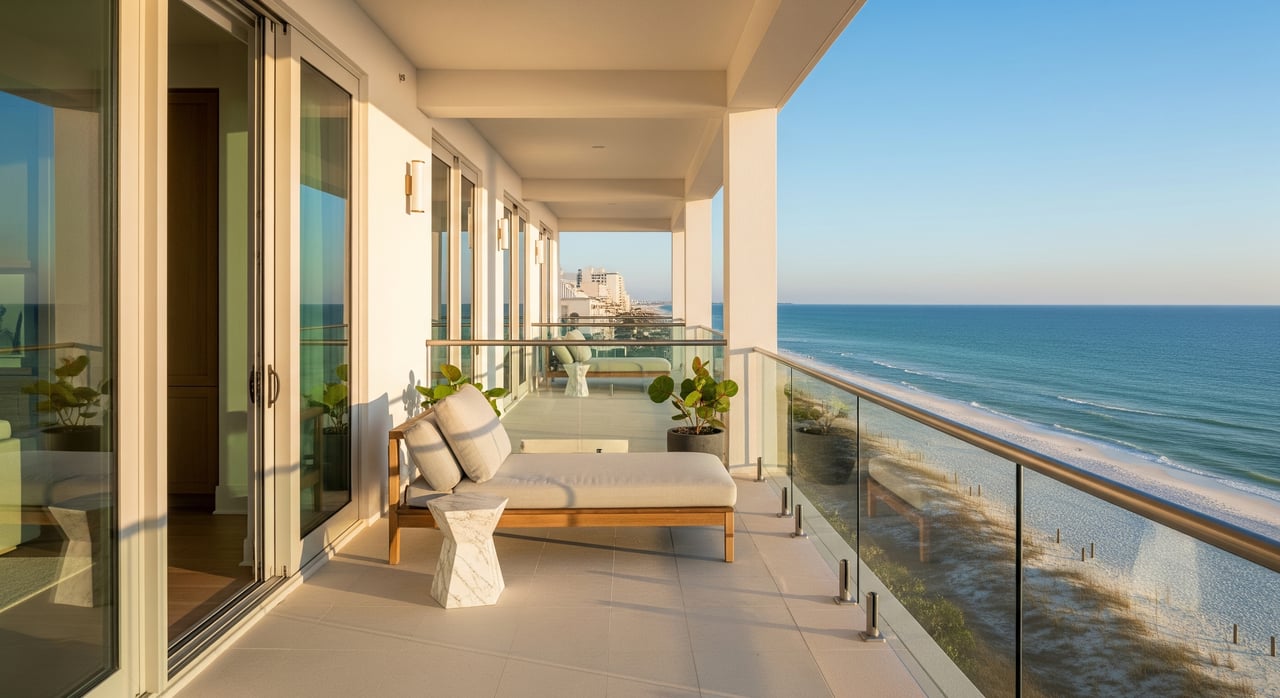
What is your view worth? On Destin’s sugar-white shoreline, two similar gulf-front condos can trade tens of thousands apart because of floor level, HOA health, or rental rules. If you are selling or buying, getting the price right protects your time and your return.
This guide gives you a simple, finance-first way to price gulf-front condos in Destin. You will learn what drives value, how investors underwrite rentals, and a clear workflow to set a confident list or offer price. Let’s dive in.
What “gulf-front” means in Destin
“Gulf-front” means direct beachfront with an unobstructed Gulf of Mexico view and beach access. Units labeled “gulf-view” may face the water but include partial or obstructed views. Nearby or across-the-street buildings can still be desirable, but they do not price like true gulf-front.
Access type matters. Deeded or private beach access can support higher prices than shared or public access. Proximity to Destin Harbor, restaurants, and entertainment adds convenience value, especially for short stays.
The biggest value drivers
View, floor, and orientation
Uninterrupted, panoramic water views command strong premiums. Higher floors often sell for more thanks to broader views and less street noise. Orientation can influence buyer preference for sunrise or sunset light and balcony usability.
Building and unit condition
Renovated interiors, updated mechanicals, impact-rated windows and solid balcony condition support stronger pricing. In coastal settings, salt-air wear is real. Recent exterior rehab, roof work, elevator upgrades, and repainting increase buyer confidence.
HOA strength and rules
The association’s budget, reserves, and any special assessment history affect both value and financeability. Review the reserve study, board minutes, and the master insurance policy to understand what the HOA covers versus the owner. Rental rules, minimum stays, and any caps on short-term rentals shape your buyer pool.
Income potential and rental history
If the unit is a short-term rental, past gross revenue, occupancy, and seasonality matter. Investors evaluate management fees and realistic operating costs. A strong track record during peak summer months and solid shoulder-season demand can justify higher pricing.
Insurance, flood, and hazard risk
Flood zones and elevation influence required coverage and premiums. Wind and hurricane insurance availability and cost also impact buyer affordability. Mitigation features such as impact windows or recent roof upgrades can reduce risk and support pricing.
Amenities, parking, and services
Heated pools, fitness centers, covered or deeded parking, storage, on-site management, and security add convenience. Nearby marinas or boat launches can attract a broader buyer set.
Market conditions and seasonality
Inventory levels, days on market, and absorption rates move prices. Spring and early summer often bring more buyers for vacation properties. Your list timing and strategy should reflect these patterns.
The three ways to price
Sales comparison approach
This is the primary method for condos. Start with recent closed sales in the same building from the last 6 to 12 months. If none exist, use nearby gulf-front buildings with similar age, amenities, and unit mix, and adjust for differences like floor, view, renovation level, balcony condition, and parking.
Income approach for rentals
For investor units, analyze the income. Two quick checks are common: Gross Rent Multiplier (price divided by gross scheduled rent) and capitalization rate (NOI divided by price). Treat HOA dues as an operating expense when you calculate NOI, along with management fees, taxes, insurance, utilities as applicable, and a vacancy allowance.
Cost approach as a cross-check
Replacement cost less depreciation can help sanity-check outliers, but it rarely drives pricing for older condo buildings in active markets. Use it as a secondary reference.
Step-by-step pricing workflow
- Assemble documents
- Deed, tax records, any prior appraisal, HOA budget, reserve study, estoppel certificate, master insurance summary, rental history, and renovation invoices.
- Define the buyer pool
- Investor, second-home user, or primary occupant. Your likely buyer influences which approach to weigh more and how to position the price.
- Pull the right comps
- First choice is same-building sales with similar floor and view in the past 6 to 12 months. If unavailable, pick the closest gulf-front buildings and document every adjustment.
- Adjust for unit specifics
- View quality, floor height, finish level, balcony condition, parking or storage, recent renovations, and any liabilities like pending assessments or litigation.
- Run the income approach
- For rentals, gather 12 to 24 months of revenue, occupancy, and fees. Subtract realistic expenses, including HOA, to produce NOI. Compare the result to local investor expectations.
- Reconcile and set a range
- Weigh the sales comparison and income results based on your buyer pool and current market direction. Establish a target list or offer range.
- Time the market and price strategy
- Consider seasonality. Decide whether to list at market-reflective, aggressive, or premium pricing based on goals and inventory.
- Prepare buyer-ready materials
- For sellers, create a clean package: comps, HOA docs, insurance overview, rental history, and maintenance records. For buyers, outline expected operating costs and rental rules.
What to ask the HOA and manager
- What does the master insurance policy cover, and what is the owner’s responsibility inside the unit?
- When was the last reserve study, and what are the current reserve balances?
- Are there any pending or recent special assessments? For what scope?
- What is the history of major capital projects: roof, elevators, windows, exterior coatings, balconies, and seawall?
- What are the rental rules, minimum nights, and any caps on short-term rentals?
- Is there any active or pending litigation involving the association?
For investors: underwriting a Destin rental
- Start with historical revenue and occupancy, not just peak-season projections.
- Include all operating expenses: HOA dues, management fees, cleaning, supplies, utilities if owner-paid, taxes, insurance, and maintenance.
- Account for transient rental taxes when modeling net income.
- Use a vacancy factor that reflects shoulder season and off-season patterns.
- Test both GRM and cap rate against similar gulf-front units.
Risk factors to price in
- Insurance costs and availability for wind and flood can change quickly and affect affordability.
- Erosion, seawall condition, and shoreline changes can reduce buyer confidence.
- Underfunded reserves in older beachfront buildings can lead to assessments that change net ownership cost.
- Future policy shifts around short-term rentals can alter investor demand.
Smart list strategy in Destin
- Spring listings can capture vacation-minded buyers who want summer usage.
- Use professional photography that showcases view corridors and balcony depth.
- Price against the strongest same-building comps and show clear upgrade value.
- If investor-focused, present a clean, documented income package with a realistic NOI.
Buyer checklist before making an offer
- Review the HOA budget, reserve study, and minutes from recent meetings.
- Confirm rental rules, fees, and any caps that affect your plan.
- Verify flood zone, elevation, and current insurance requirements.
- Inspect balcony condition, windows, and building envelope items.
- Analyze rental history and model your NOI with all expenses included.
The bottom line
Pricing gulf-front condos in Destin starts with view and floor, but it is sealed by HOA health, insurance realities, and income performance. When you blend the right comps with a clean income model and a clear list strategy, you set a number that the market will support.
If you want a finance-forward pricing plan for your unit or a buyer-side valuation with comps and NOI modeling, reach out to the Justin Myers Real Estate Team. We will help you price with confidence and move with clarity.
FAQs
How much more do gulf-front units command in Destin?
- Premiums vary by directness of access, view quality, floor level, and building desirability, so compare same-building or closest-building sales with different view orientations to estimate the premium.
Should I use the income approach for a single Destin condo?
- Yes if it operates as a short-term rental, using actual revenue and realistic expenses, including HOA dues, to calculate NOI and cross-check price with GRM and cap rate.
How do HOA dues affect pricing for gulf-front condos?
- Higher dues reduce net cash flow for investors and can reduce market price; frequent special assessments or underfunded reserves also weigh on value.
Do renovated gulf-front condos sell for more in Destin?
- Generally yes, when finishes meet buyer expectations and comparable renovated sales support the premium; buyers pay most for view plus well-executed updates.
How do flood zones impact price on Destin beaches?
- Higher-risk zones often carry higher insurance costs and can reduce demand, while stronger mitigation features and favorable elevation can support higher pricing.