Thinking about trading your current state for white-sand beaches and a Gulf Coast address? If you are planning a move to Miramar Beach from out of state, you are probably balancing excitement with a long list of practical questions. This guide will help you understand how Miramar Beach is laid out, what daily life looks like, and how to make a smart long-distance purchase with more confidence. Let’s dive in.
Why Buyers Relocate to Miramar Beach
Miramar Beach sits on the western edge of South Walton along a 26-mile Gulf-front corridor south of I-10. Rather than functioning like a compact inland suburb, it operates as part of a broader coastal system that connects beach communities, shopping hubs, resort areas, and regional services. According to South Walton’s visitor information, the area is about 35 miles from both Northwest Florida Beaches International Airport and Destin-Fort Walton Beach Airport.
For many out-of-state buyers, that regional setup is part of the appeal. You get beach access, resort-style amenities, and everyday conveniences in one coastal corridor, with Miramar Beach positioned near key anchors like Sandestin, Seascape, Grand Boulevard, The Market Shops, and Silver Sands Premium Outlets.
The local housing profile also gives useful context. The U.S. Census Bureau reports a 2020 population of 8,002, a median household income of $103,250, a median owner-occupied home value of $733,000, and an owner-occupied housing rate of 81.9%. Those numbers point to a high-value coastal market with a strong base of full-time ownership.
What Daily Life Looks Like
If you are relocating from a larger metro area, it helps to reset your expectations. Miramar Beach is largely a car-first coastal corridor centered around US-98, also known locally as Emerald Coast Parkway. That means your experience of the area often depends on where your home sits in relation to beach access, shopping, medical care, and the routes you use most often.
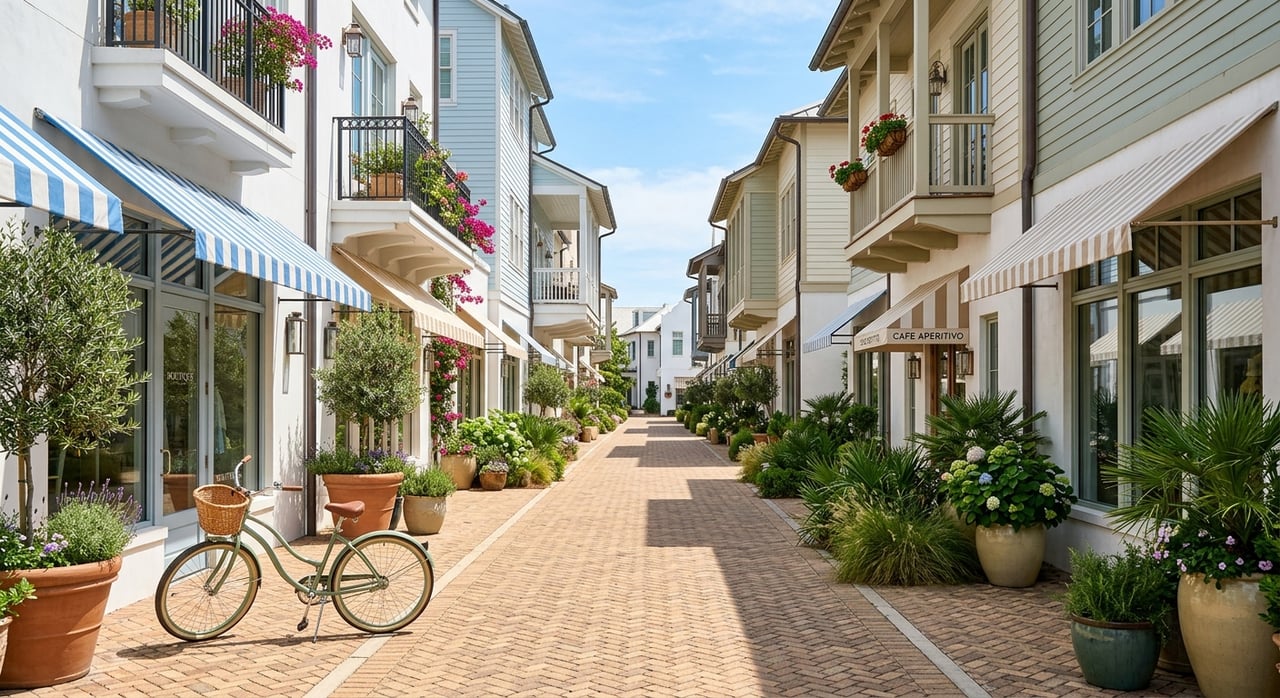
Daily errands often revolve around a few major hubs. Grand Boulevard includes 765,000 square feet of retail and restaurant space, office space, three hotels, and planned residences. Nearby, The Market Shops and Silver Sands Premium Outlets add more options for dining, errands, and shopping in the immediate Miramar Beach area.
Resort communities also shape everyday life here. Sandestin Golf and Beach Resort spans 2,400 acres with 30 neighborhoods and more than seven miles of beaches, while Seascape includes more than 2,000 feet of shoreline along with golf and tennis amenities. Even if you do not buy inside one of these communities, they help define the local landscape and lifestyle.
Transportation and Getting Around
One of the biggest adjustment points for out-of-state buyers is transportation. If you are used to rail, subway, or broad bus service, Miramar Beach will feel different. The Destin-Fort Walton Beach Airport transportation page states that there is currently no public transportation system serving the airport, so rental cars, rideshare, and private shuttles are the standard options.
Walton County has announced expanded free Beach Tram service in 2026, including planned service toward Miramar Beach Regional Beach Access. That is helpful for beach circulation, but it is not a replacement for a full daily transit network. For most full-time residents and many second-home owners, a personal vehicle remains the practical default.
If you are planning a relocation trip before buying, it is smart to test-drive your likely routine. Time how long it takes to get from a neighborhood you like to grocery stops, healthcare, beach access, and the airport route you would use most often.
Beaches, Parks, and Outdoor Access
A major reason people move here is the outdoor lifestyle, and Miramar Beach offers strong public access within the wider South Walton system. South Walton’s beach access guide notes that the area includes more than 50 beach and bay access locations along 26 miles of shoreline, including nine regional beach accesses.
In Miramar Beach, the regional beach access at 2375 Scenic Gulf Drive includes seasonal lifeguards, ADA-accessible restrooms, an ADA boardwalk, parking, and a beach-conditions flag. Walton County’s Miramar Park adds more than 200 parking spaces, restrooms, showers, three beach accesses, and over 1,100 feet of public Gulf beach.
Outdoor life extends beyond the shoreline. Walton County says the area also includes more than 200 miles of hiking and biking trails, four state parks, a 15,000-acre state forest, and 15 coastal dune lakes. Topsail Hill Preserve State Park is a standout nearby resource with 3.2 miles of beach, over 10 miles of trails, and tram access to the beach.
Housing Basics for Out-of-State Buyers
Miramar Beach offers a mix of property types, and your best fit depends on how you plan to use the home. Some buyers want a primary residence with convenient access to daily services. Others are looking for a second home, a condo with lower day-to-day upkeep, or a property that fits broader financial goals.
Because this is a coastal market, location details matter more than many out-of-state buyers expect. The same ZIP code can include different utility providers, different flood considerations, and different access patterns to beaches and major roads. Walton County notes that utility service can vary by address, including providers such as South Walton Utility Company, Regional Utilities, Chelco, and Florida Power & Light, so you should verify utility assignments by parcel before closing through the Walton County utility services page.
This is also where local guidance becomes especially valuable. A home that looks perfect online may feel very different once you factor in traffic flow, parking, beach access, or its distance from your most-used destinations.
Flood Zones and Coastal Due Diligence
For any out-of-state move to Miramar Beach, flood risk should be part of your early research, not a last-minute item. Coastal location is a benefit, but it also means property-level due diligence matters. Two homes close to each other can still have different flood map designations or insurance implications.
FEMA says the Flood Map Service Center is the official public source for flood hazard maps. Walton County’s map portal also includes evacuation zones, evacuation routes, wind exposure areas, and official address verification, which can be helpful as you narrow your search.
Before you commit, make sure you understand:
- Flood map status for the specific address
- Evacuation zone and route information
- Wind exposure details
- Early insurance cost estimates
That last point matters more than many buyers realize. In a coastal market, insurance should be part of your affordability conversation before you finalize an offer.
Schools and Healthcare to Verify Early
If your move involves school planning, verify details directly before you buy. Walton County School District uses controlled open enrollment, and certain active-duty military dependents may receive priority when a move is caused by military orders. Attendance zone and capacity should be confirmed during your home search, not after closing.
For healthcare, Miramar Beach has close-by options. Ascension Sacred Heart Emerald Coast provides 24/7 emergency care and specialty care in Miramar Beach. Ascension also announced Sacred Heart Primary Care and Urgent Care - South Walton in Santa Rosa Beach, open seven days a week.
When you relocate from out of state, these practical anchors often matter just as much as the home itself. Knowing where you will go for routine care, urgent care, and day-to-day needs can help you choose the right part of the corridor.
How to Buy From Another State
Long-distance purchases are common, but they work best when you stay organized and make decisions in the right order. The first step is financing. The Consumer Financial Protection Bureau notes that preapproval is not a guaranteed loan offer and typically expires in 30 to 60 days, so timing matters.
It is also smart to compare lenders carefully. The CFPB recommends that you ask at least three lenders for preapproval or Loan Estimates so you can compare terms side by side. That step can help you evaluate more than just the interest rate, including closing costs and structure.
Once you are under contract, protect yourself with clear contingencies and fast inspections. The CFPB advises making the contract contingent on financing and a satisfactory inspection, then scheduling an independent inspection as soon as possible.
Here is a simple relocation checklist to follow:
- Get preapproved before you shop seriously
- Compare at least three lenders or Loan Estimates
- Review monthly payment range, not just purchase price
- Confirm financing and inspection contingencies
- Schedule an independent inspection quickly
- Review the Closing Disclosure carefully
- Get an informal insurance estimate before final commitment
- Verify utility providers and address-level map details
- Confirm any employer relocation benefits in writing
For military buyers, there may be additional tools available. The VA housing assistance page explains VA-backed home loan options and notes that many eligible borrowers use no-down-payment financing. Military OneSource relocation planning tools may also be useful if your move is tied to orders.
A Smart Relocation Strategy
If you are buying from another state, try to approach Miramar Beach in layers. First, learn the corridor and identify the parts of the area that match your routine. Next, narrow by property type, budget, and your intended use. Then, confirm financing, insurance expectations, flood and evacuation details, and utility setup before you move too far down the line.
This is where a finance-first approach can make the process smoother. When you combine local market perspective with solid lending preparation and property-level due diligence, you reduce surprises and make better decisions.
Relocating to the Emerald Coast is not just about finding a house near the beach. It is about choosing a home that fits your daily life, your timeline, and your financial comfort level. If you are planning a move to Miramar Beach, the Justin Myers Real Estate Team can help you evaluate neighborhoods, compare options, and move forward with clarity.
FAQs
What is Miramar Beach like for out-of-state buyers?
- Miramar Beach is a coastal, car-first community within the broader South Walton corridor, with strong beach access, major shopping hubs, resort communities, and a high-value housing market.
How far is Miramar Beach from major airports?
- South Walton says Miramar Beach is roughly 35 miles from both Northwest Florida Beaches International Airport and Destin-Fort Walton Beach Airport.
What should buyers verify before purchasing a home in Miramar Beach?
- You should verify flood map status, evacuation information, utility providers by parcel, insurance estimates, financing terms, and inspection results before closing.
Are there public beach access points in Miramar Beach?
- Yes. Miramar Beach is part of South Walton’s larger beach access network, and the area includes regional access points with amenities such as parking, restrooms, and ADA features.
How does school enrollment work for Walton County buyers?
- Walton County School District uses controlled open enrollment, so buyers should confirm attendance zone details and school capacity directly with the district before purchasing.
Is Miramar Beach easy to navigate without a car?
- For most residents, a car is the most practical way to get around because the area functions as a car-first coastal corridor and airport public transit service is currently not available.