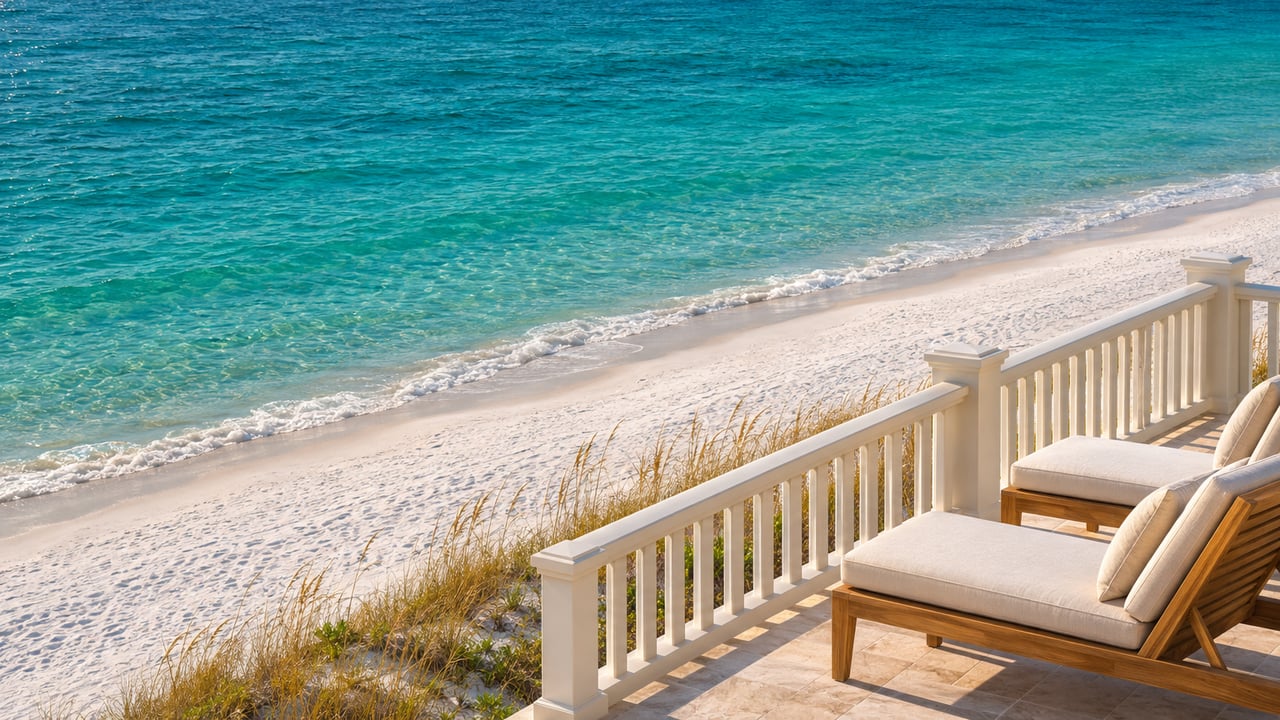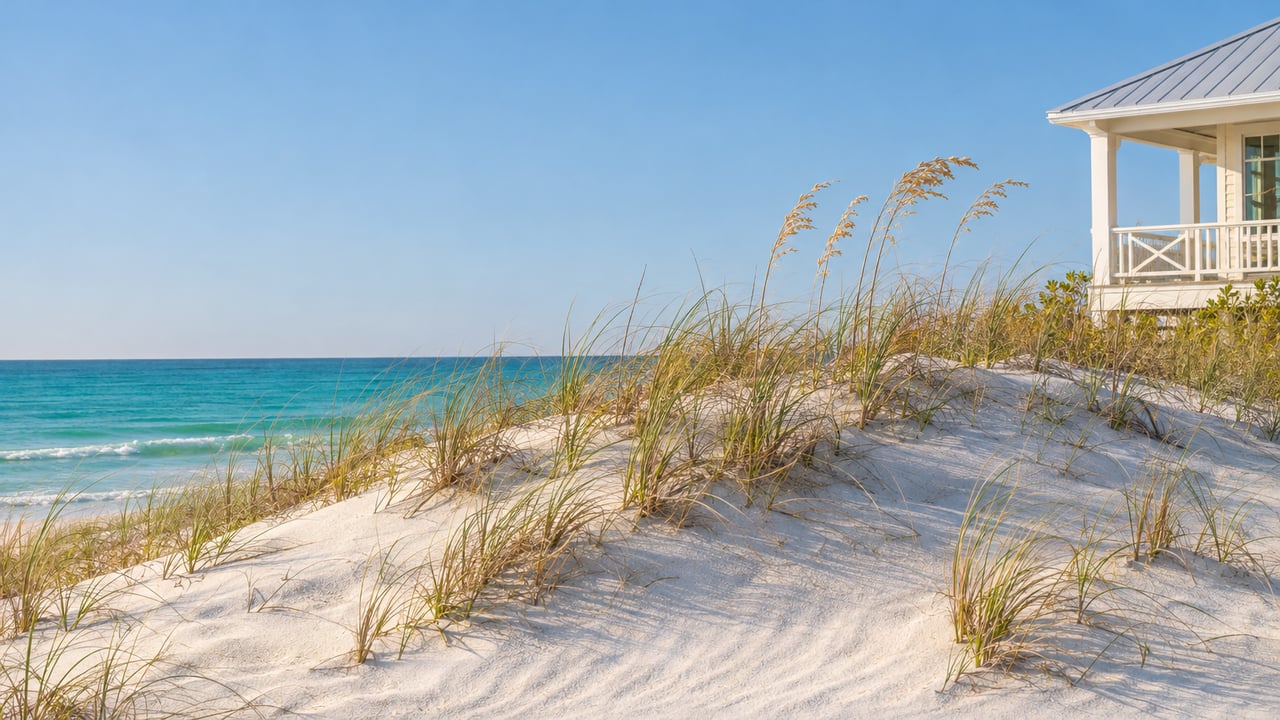
The dunes in front of Seaside are being rebuilt by Seaside. Hurricane Isaias hit Walton County from October 8 to October 12, 2026, and its surge eroded beaches and dunes along 30A. About two weeks later, on Monday, October 26, the town started its own dune restoration, according to WJHG's October 27 report. The county's renourishment design is expected in October 2027, so the town is rebuilding its dunes in the meantime.
The work follows a decision made about ten years ago.
The Decision Behind the Dune
Florida's Department of Environmental Protection published its Strategic Beach Management Plan for the Panhandle Gulf Coast Region in August 2026. It groups WaterColor, Seaside and Seagrove Beach into one 3.9-mile segment, Reach 4, which runs from DEP survey monument R78 to R98. The state designates the whole segment as critically eroded.
The plan's wording about Seaside matters. Seagrove Beach has 3.1 miles of erosion that threatens development. WaterColor and Seaside cover the western 4,000 feet of the segment, and the plan says they were designated "for continuity of management of the coastal system following federal project authorization, even though most of the development is behind the CCCL," meaning the Coastal Construction Control Line. Seaside got the label so the shoreline could be managed as one system under a federal project.
That federal project was never built. The same plan says that "the County and upland property owners in 2015/2016 elected not to proceed with the Walton County Hurricane and Storm Damage Reduction Project (Reaches 1 through 5)." In earlier storms, the state's help here was limited to "assisted recovery of the beach and dune system within the most eroded developed areas" after Hurricanes Opal and Georges. The plan also notes the area was heavily hit by Hurricane Ivan in 2004.
The beach in front of Seaside today is a natural beach, without the engineered sand and maintenance schedule a nourishment project would have given it.
FEMA Funding Options for Walton County
On October 27, Taylor Engineering presented the county's federal funding options to the Walton County Board of County Commissioners. The presentation separates two FEMA categories, and only one of them is a temporary measure.
| FEMA Category G | FEMA Category B | |
|---|---|---|
| What it pays for | Permanent repair to a restored beach | Temporary emergency berms |
| Scale | Restores the original design | Up to 6 cubic yards of sand per linear foot, built to protect against a 5-year storm |
| Status for Walton | FDEM feedback says the project likely does not qualify | Needs engineering analysis of each beach segment |
The presentation states that "unimproved beaches are ineligible" for Category G. FDEM's feedback was that the county likely does not meet the Category G requirements.
Taylor's slides describe Category B berms as "not intended to permanently restore the beach." The typical cost share is 75% FEMA, 12.5% FDEP and 12.5% county.
The next steps Taylor listed were to process public LiDAR survey data, run an engineering analysis of which beach segments might qualify, and report findings and cost estimates to county staff.
The longer-term fix is further out. Walton County Director of Beach Operations Josh Ervin told WJHG on October 17 that the design for a federally funded renourishment project would likely be finished "in October of next year." He said emergency dune repair has "some eligibility" only "in areas where you have a nourished beach and have an ongoing maintenance period." That October 2027 date is for the design only, and construction would come later.
Seaside Started Its Own Dune Work
Seaside started with what it could control. WJHG reported that the town contacted the Dune Doctors and FDEP to find out what kind of sand and fencing the dune system needed. Town officials said the dunes "did their job" during the storm, but the surge caused significant beach erosion.
"The dune restoration is separate from the beach renourishment conversation. We are strictly looking at the ecological restoration of our dunes. The dunes are such an important part of the protection of our town and the area."
Kevin Boyle, Seaside manager, speaking to WJHG
Boyle also told the station that the town is focused on keeping community beach access open while it rebuilds a healthy dune system.
Just west of WaterColor, the storm's effects show how far the surge reached. WJHG's October 12 report described surge topping the dunes in Grayton Beach and filling Western Lake. It carried a neighbor's dock about a quarter mile down the lake and briefly reversed the lake's usual flow into the Gulf.
DEP's Post-Storm Order
FDEP Emergency Final Order OGC 26-2105, signed October 8, 2026, covers Walton County. DEP's post-storm handout for private property owners is dated October 15.
Where State Nourishment Could Come In
In June 2025, Florida enacted CS/SB 1622, addressing beach restoration.
For decades, public easements from upland owners were the condition federal participation depended on. The 2012 Army Corps study for Walton County generally required beaches to be public, or private with public easements or access. DEP's 2026 strategy for this subregion still calls for designing and building the Walton project. That project would include dune tapers that let coastal dune lakes keep flowing out to the Gulf. According to Ervin, the design for the federally funded project is expected around October 2027.
The 2025 law also restored local authority to recognize customary use. That is a separate question about who may use privately owned sand, and we covered it in our Dune Allen post on Gulf-front deeds that stop short of the Gulf.
Questions for a Seaside Gulf-Front Showing This Winter
Seaside already asks buyers to follow its architectural approval history, which we covered in why a passed inspection doesn't close the file. After Isaias, the sand in front of the house needs the same paper trail.
- Did the walkover survive substantially intact?
- Who is doing the dune work in front of this lot, and under which permit? Ask whether it is the town's project, the seller's own work or both.
- Where did the sand come from?
- Which survey monument is closest to the lot? Reach 4 runs from R78 to R98, and that location is how DEP's plan and any future project would refer to the lot.
- Does the lot depend on an existing deck, gazebo or retaining wall seaward of the house?
For a contract that is already pending, our post-Isaias closing guide covers the contract side. Current listings are on our Seaside homes for sale page.
At The Justin Myers Team, we help buyers set those questions up before an offer and help sellers document the dune and walkover work they have already done. Find Your Emerald Coast Home with a team that reads the beach as closely as the listing.