A buyer walks into a Destin condo assuming it will be the simpler rental property. No zoning check. No annual registration with the city. No sign to post on the balcony. Compare that to the single-family house three streets over, which needs its parcel confirmed inside an approved zoning district before a single night gets booked. The condo looks like the lighter lift.
It often isn't. The city's registration requirement is real, but it is also the smaller obstacle. The larger one lives inside a document most buyers never open before they write an offer: the condominium association's declaration. And on the Emerald Coast, that document can say no to a rental plan the city would have approved without blinking.
The Rule That Applies to Houses, Not Condos
The City of Destin requires single-family homes, townhomes, duplexes, and triplexes to register annually as short-term rentals. That registration only works if the parcel sits inside one of the city's approved zoning districts for transient rental use, districts with names like Crystal Beach Resort, Holiday Isle Mixed Use, Gulf Resort Mixed Use, Calhoun Mixed Use, and a handful of others spread across the city's mixed-use and harbor-adjacent areas. Land outside those districts cannot be used for short-term rental, full stop, regardless of how the property is marketed or how long the previous owner rented it.
Once a house clears that zoning test, the requirements stack up: a completed registration, an annual fee tied to square footage, an 18-inch by 18-inch sign posted within seven days showing occupancy limits and a responsible party's contact information, and a parking affidavit confirming enough spaces exist for the bedroom count. Miss the zoning check and none of the rest matters. The city's short-term rental FAQ spells out the registration mechanics, but the zoning boundary is the gate everything else sits behind.
Condominiums and apartments skip this entire process. The city does not require them to register as short-term rentals at all. That single distinction is where the assumption starts to form: fewer city hoops must mean an easier path to rental income.
Same Name, Opposite Answer
Crystal Beach is where that assumption runs into its first contradiction. The name covers two separate zoning districts with two separate answers to the same question. Crystal Beach Resort, the district most associated with the neighborhood's dense concentration of vacation homes and duplexes, permits short-term rental use. Crystal Beach Neighborhood, an adjoining district carrying the same place name, does not. The city's own zoning factsheet for CBN states plainly that the district exists for permanent or seasonal residential use and specifically excludes commercial hotels, motels, and bed and breakfasts from locating there.
Two parcels can sit blocks apart, both carry the Crystal Beach name in casual conversation, and land on opposite sides of the rental question because of a zoning line drawn on a city map rather than a fence line on the ground. A buyer working from the neighborhood's reputation as a rental-friendly area, without pulling the specific parcel's zoning designation, can end up owning a home in the one pocket of Crystal Beach where that reputation does not apply.
What the City Exempts, the Building Can Still Refuse
Back to the condo. Skipping city registration does not mean skipping oversight. It means the oversight comes from a different source, one with its own incentives and its own tolerance for guest turnover.
Florida law gives condominium associations broad authority to restrict rentals through their declarations, and Emerald Coast buildings use that authority more often than buyers expect. A condo association can set a minimum stay of three nights, seven nights, or thirty days. It can cap how many times per year an owner is allowed to rent. It can require every unit to participate in a centralized rental program run by the building rather than allowing owners to list independently on Airbnb or Vrbo. It can set a minimum guest age for the primary renter. None of these require city approval, because the city was never the authority in the first place.
That inversion matters for a simple reason: an association's rental rules can be more restrictive than anything the city would ever impose, and a buyer who checked the zoning map but never requested the condo declaration has only checked half the question.
Some Destin condo buildings operate as condo hotels, where individual units participate in a mandatory rental pool managed by an on-site operator. In that structure, an owner does not list the unit independently at all. Income arrives as a distribution from the pool, and the building, not the owner, controls booking policy, minimum stays, and guest screening.
The Holiday Isle Comparison
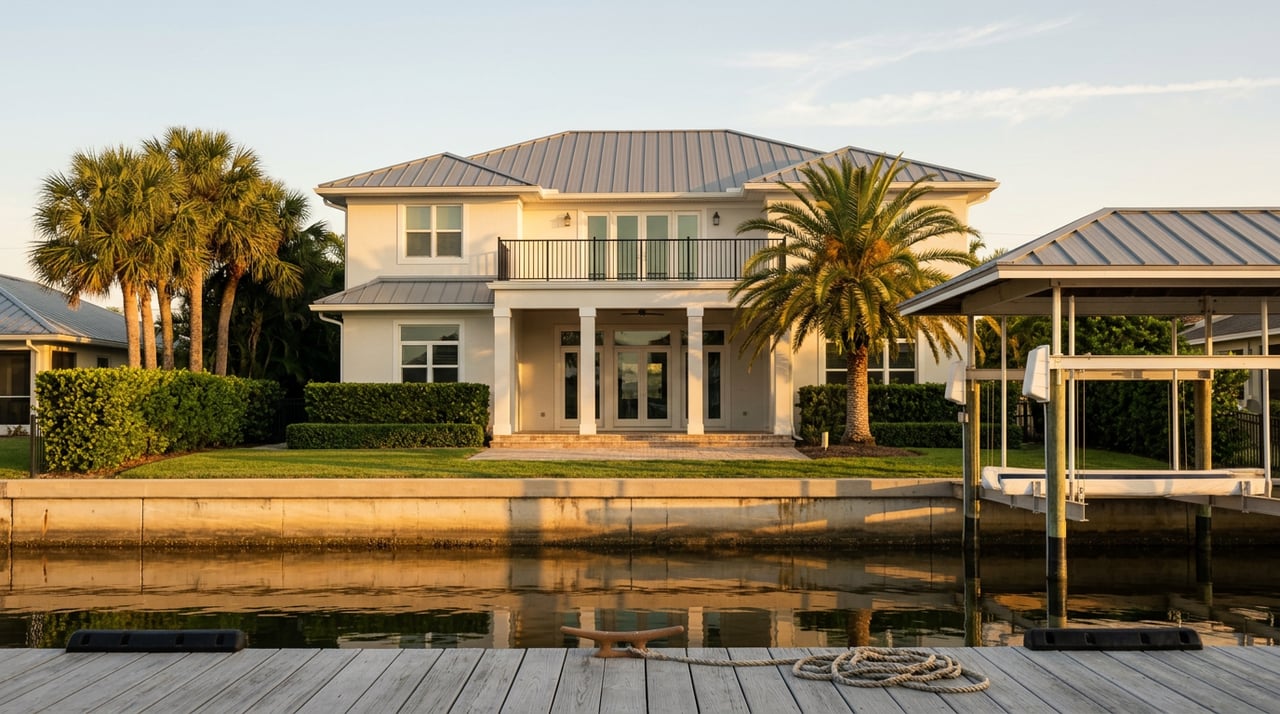
Holiday Isle makes the contrast easy to see because it holds both property types inside one zoning district. The peninsula sits under Holiday Isle Mixed Use zoning, which permits short-term rental for both the canal-front houses with private docks and the condo buildings that line the Gulf and harbor sides, buildings like Sandpiper Cove, Jetty East, Inlet Reef, and Shoreline Towers.
A house on Holiday Isle clears the zoning test automatically since the whole peninsula sits in an approved district. From there it is a straightforward registration, sign, and parking affidavit, and the ongoing rental frequency is the owner's call. A condo in one of those same buildings clears the city question by default, since it never had to ask it, but the owner's actual rental frequency, minimum stay, and platform choice are whatever that specific building's declaration allows. Two properties inside the same zoning district, subject to entirely different rental ceilings, because one ceiling is set by the city and the other by a board of fellow owners.
The Gated Gulf-Front Exception
The Henderson Beach corridor, home to the gated Destiny by the Sea community and the condo-hotel Henderson Beach Resort, sits under Gulf Resort Mixed Use zoning, which generally permits short-term rental. But this is also where the condo-hotel structure shows up most clearly among Destin's higher-end inventory. A buyer drawn to that corridor for its gated privacy and price point should ask early whether a given building operates a mandatory rental pool, since that changes what "owning a rental" actually means day to day, from setting your own calendar to receiving a distribution on someone else's schedule.
What to Ask Before Writing an Offer
The zoning question and the association question are both answerable before a contract is signed. A buyer serious about rental income on any Destin property, house or condo, should confirm:
- The parcel's current zoning designation, checked directly against the city's zoning map rather than assumed from the neighborhood's general reputation
- Whether the district permits short-term rental use as defined by the city's land development code
- For a condo, the full declaration and any amendments addressing minimum stay, annual rental frequency, and mandatory rental pool participation
- Whether the building requires all owners to participate in a centralized program or allows independent listing
- Whether the HOA or condo board has changed its rental policy in the past two years, since boards can and do tighten these rules over time
A house that clears zoning and registers with the city has a rental ceiling set mostly by demand and season. A condo that skips city registration has a rental ceiling set by a board meeting the buyer was not in the room for.
A Few Questions Worth Settling Before You Buy
Does buying in an approved zoning district guarantee I can rent short-term? It clears the city's threshold, but not a condo association's. City zoning and building-level rental rules operate independently, and satisfying one does not satisfy the other.
Can a condo board add new rental restrictions after I already own the unit? Florida law generally limits how newly adopted restrictions apply to existing owners, but the details depend on the specific amendment and when it passed. This is a question for the association's records and, where the stakes are high, a real estate attorney, not a general assumption either way.
Is Okaloosa Island the same as the City of Destin for these rules? No. Some blocks on Okaloosa Island carry protective covenants that predate current state rental law and can prohibit transient rentals independent of city zoning. Confirming whether a parcel sits inside city limits or unincorporated county land, and whether an older covenant applies, is a separate check from the zoning map.
Every one of these questions gets answered with documents that exist before closing, not after. The zoning designation is public. The declaration is available from the seller or the association. The gap between what a buyer assumes about "the easy property" and what the paperwork actually says is where rental plans go sideways, and it is entirely avoidable with the right requests made early.
If you are comparing a Destin house against a Destin condo with rental income in mind, the Justin Myers Team can pull the zoning designation and request the association documents before you write an offer, not after. Find Your Emerald Coast Home.