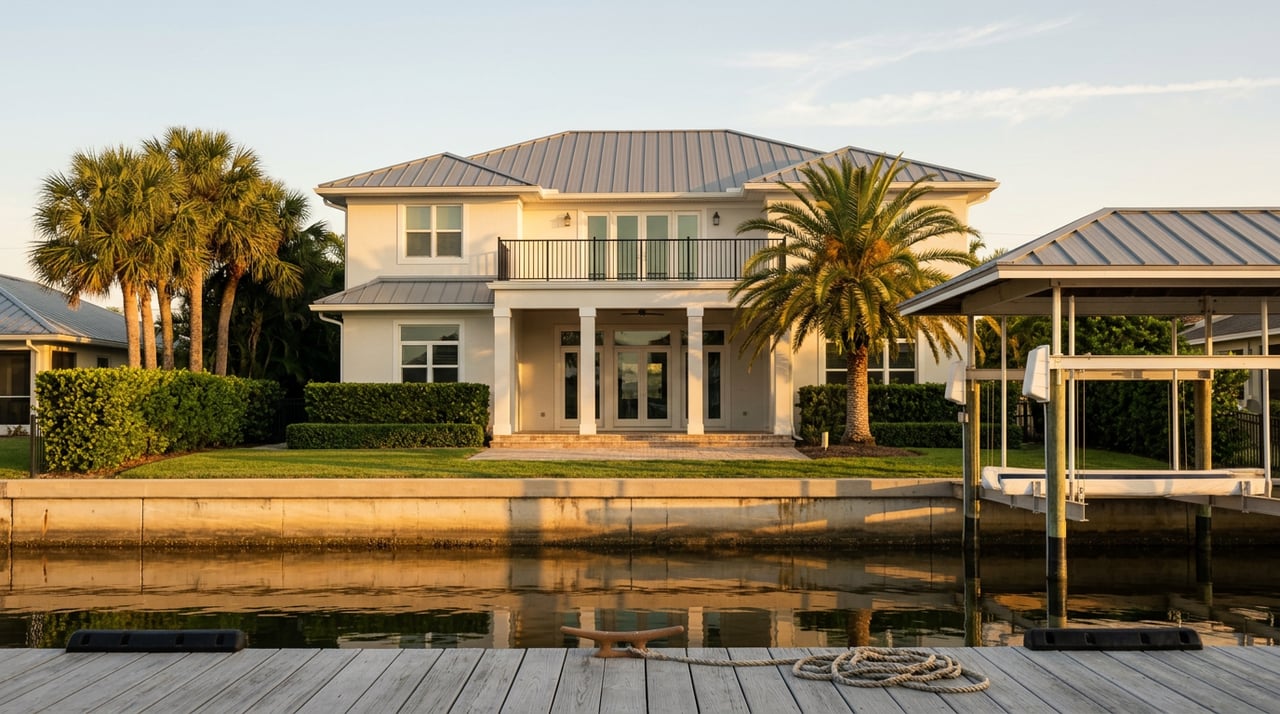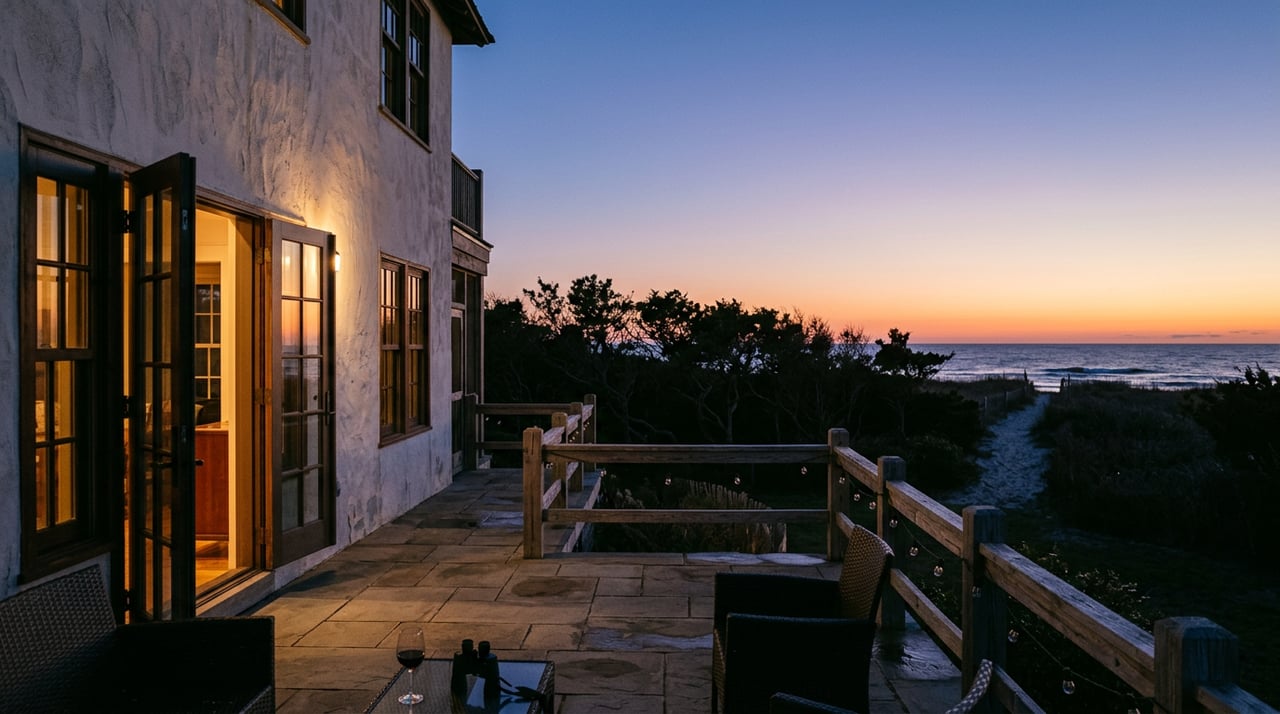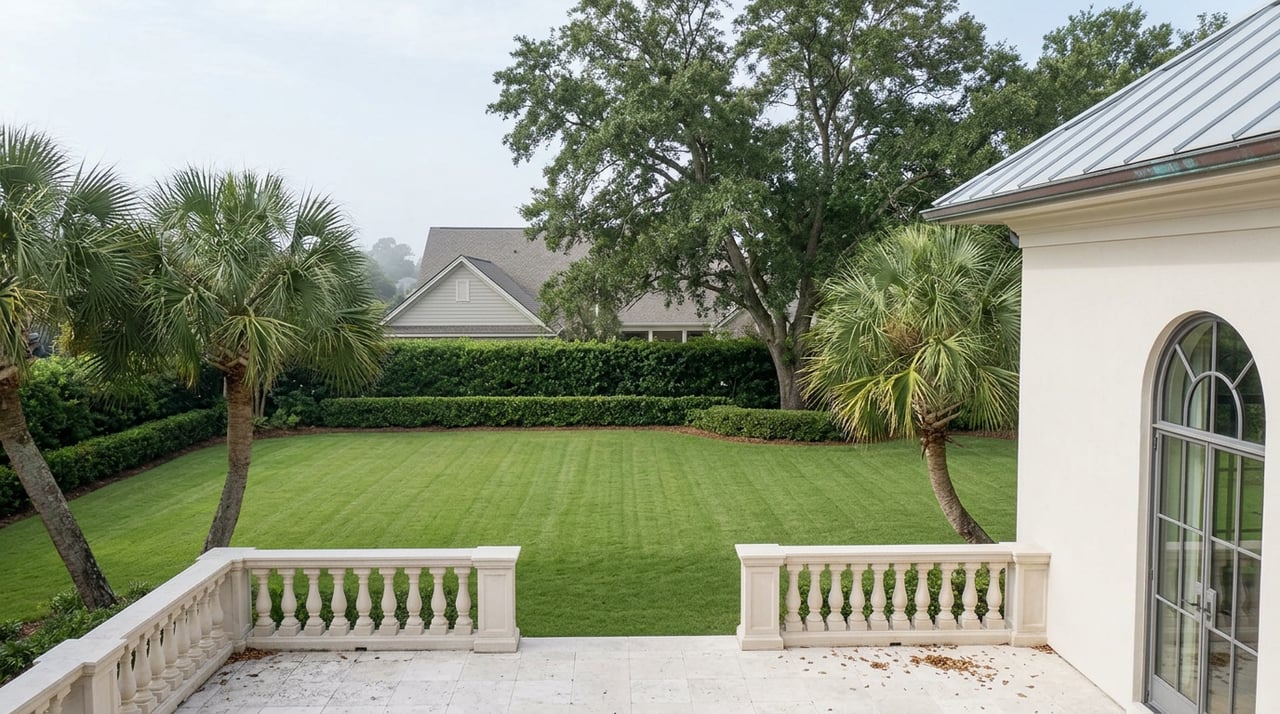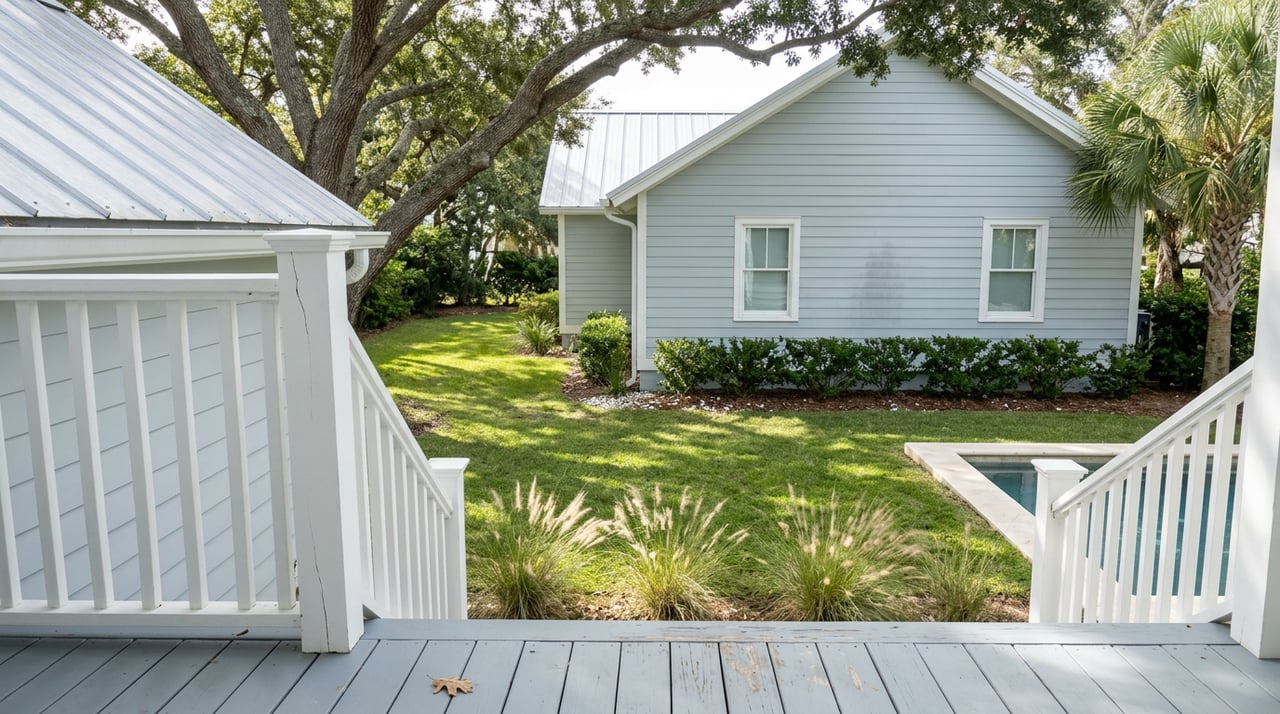
A buyer scrolling listings sees two homes in WaterColor priced within a few hundred thousand dollars of each other. Same coastal architecture, same access to the Beach Club, same zip code. One comes with a rental history the listing agent leads with. The other comes with a line buried in the disclosures that says short-term rentals are prohibited, permanently, by the same HOA that governs both houses.
That is not a quirk of one seller's preference. It is the point of the neighborhood it sits in.
WaterColor is not a single real estate product wearing one name. It is a master-planned community on Scenic Highway 30A, developed by the St. Joe Company, built out across five phases and organized into named districts within them. Four of those phases were designed, marketed, and sold on the promise of rental income. The fifth was built specifically to remove that promise. Understanding which side of that line a listing sits on tells you more about what you are actually buying than any median price pulled from a portal.
The Map Nobody Hands You Up Front
Walk through WaterColor's phases and the pattern is consistent until it isn't.
Phase 1, closest to the Gulf and the Beach Club, contains the Old Park, Cottage, Beach, and Gulf Districts, the community's original cottages and its priciest beachfront real estate. Phase 2 sits north and west of that, home to the Forest District and the Camp District, where Camp WaterColor's lazy river and family programming anchor the amenity draw. Phase 3, across a pedestrian bridge over Western Lake, is the Lake District, known for larger lakefront homes and the Frog Pool. Phase 4, the Crossings District, is the newest and most affordable entry point, sitting near the WaterColor Crossings shopping center and its Publix.
All four of those phases allow short-term rentals under the HOA's rules, and rental income is a stated selling point in nearly every listing description you'll find for them.
Then there is Phase 5, the Park District: 41 custom homesites, no more, no fewer. When the St. Joe Company released these lots for sale, it did so in two scheduled 48-hour windows, first in October 2020, then again in mid-2021, selling out both times before the final handful went to first-come, first-served buyers. Every home built on those 41 lots is bound by a rental restriction that isn't a suggestion. It's a permanent condition of the deed.
| Phase | District Name(s) | Short-Term Rentals | Defining Feature |
|---|---|---|---|
| 1 | Old Park, Cottage, Beach, Gulf | Allowed | Closest to the Gulf and Beach Club |
| 2 | Forest, Camp | Allowed | Camp WaterColor, lazy river |
| 3 | Lake | Allowed | Western Lake frontage, Frog Pool |
| 4 | Crossings | Allowed | Newest construction, most affordable entry |
| 5 | Park | Not allowed | 41 custom homesites, private residents-only pool |
Why a Developer Builds a Neighborhood That Refuses Its Own Business Model
WaterColor's entire brand recognition on 30A comes from being one of the corridor's strongest short-term rental performers. So why would the same company that built that reputation carve out 41 lots and strip them of the one right that makes the rest of the community lucrative for owners?
Because a resort community that rents heavily has a structural problem for the buyer who doesn't want to rent at all. Turnover, guest traffic, and amenity crowding are the cost of the rental income everyone else in the neighborhood is collecting. A buyer looking for a genuine primary residence or a true second home, one where the house next door isn't cycling through a new family of eight every Saturday, has to pay a premium for that quiet somewhere on 30A. St. Joe built that premium product inside its own community instead of losing that buyer to Rosemary Beach or Alys Beach.
The Park District's own marketing at launch made the trade explicit: a neighborhood built for primary living and second-home ownership, with a private pool reserved for owners only and full access to every other WaterColor amenity, minus the rental traffic. It's a smaller, quieter product manufactured by subtraction rather than addition.
What the Other Four Phases Are Actually Selling
If the Park District's value proposition is the absence of rental guests, the other four phases sell the opposite, and the numbers behind that pitch are specific enough to check.
One Lake District home currently listed advertises $388,479 in 2025 rental revenue, with a 2026 projection of $401,350. That is the kind of figure a buyer weighing WaterColor against a non-rental 30A community should actually be comparing, not a blended community-wide median that mixes income-producing Phase 1 through 4 homes with income-restricted Phase 5 homes and calls the result one number.
That blending is exactly why WaterColor price data looks inconsistent depending on where you find it. A portal pulling from a mix of rental-active cottages in the Beach District and rental-restricted new construction in the Park District is averaging two different products with two different buyer bases and two different reasons to pay what they paid. As of this August, resale listings in the community range from a newly built five-bedroom in the Park District priced near $4.5 million to an older four-bedroom built in 2006 listed just under $3.2 million elsewhere in the neighborhood. Same brand name, same HOA, genuinely different assets.
The Friction That Applies No Matter Which Side You Buy Into
Whether a home can be rented or not, every WaterColor owner runs into the same set of operational rules, and a few of them change the math on both sides of the line.
- Amenity access runs on a wristband system tied to a home's design-review-approved occupancy, not the number of guests actually staying there. A rental group is charged and tracked against the certified capacity of the house, whether every bed is filled or not.
- The community charges a guest fee per person per night for rental stays, calculated against certified maximum occupancy rather than actual headcount, which matters directly to anyone modeling rental income against the Lake District example above.
- Golf carts run through a single authorized vendor, the Electric Cart Company, under a strict one-cart-per-address rule. Outside carts, even ones an owner already owns, are subject to towing.
- Buyers pay a 0.5 percent community enhancement fee at closing on every WaterColor purchase, regardless of phase or rental status.
- The community is professionally managed through CCMC, which handles the HOA's day-to-day operations, dues collection, and rule enforcement across every phase.
None of these rules change based on whether you can rent your house. They apply to the Park District owner and the Beach District investor alike, and they belong in any carrying-cost estimate before either buyer signs.
Reading a Listing Like You Know the Map
Before writing an offer on anything in WaterColor, the phase and district name on the listing sheet matter more than the square footage. A buyer building a rental income plan around a home in the Park District will hit a wall the HOA has no discretion to waive. A buyer looking for the quietest possible version of WaterColor who ends up in the Beach District, the Cottage District, or the Camp District should expect the rental turnover that comes standard there.
The move that avoids both mistakes is straightforward: request the recorded declaration and any phase-specific rental addendum for the exact lot before making an offer, not a general HOA summary for WaterColor as a whole. If rental income is part of the plan, ask for that specific property's actual booking and revenue history rather than a community-wide average, since a Lake District number and a Park District number aren't measuring the same thing.
A Few Questions Buyers Ask About This
Can a Park District home ever be converted to allow short-term rentals later? The restriction is a permanent condition tied to the phase, not a temporary HOA policy up for a future vote by that community's owners alone. Treat it as fixed when you buy.
Are all four rental-allowed phases equally strong for rental income? No. Proximity to the Beach Club, Western Lake, or Camp WaterColor affects booking demand, which is part of why a single blended median across all four phases tells a buyer very little about what a specific address will actually earn.
Does the rental restriction affect long-term leasing too? The restriction discussed here applies specifically to short-term, vacation-style rentals. Anyone considering a longer-term lease arrangement in any WaterColor phase should confirm the specific minimum-stay language in that property's recorded documents before assuming standard long-term leasing is unaffected.
WaterColor rewards a buyer who reads it as five different neighborhoods sharing one name, not one neighborhood with a range of prices. If you're weighing a rental-income property against a quiet, restriction-protected one and want the actual numbers pulled for a specific address before you write an offer, the Justin Myers Team can get you there. Find Your Emerald Coast Home starts with knowing which WaterColor you're actually buying.