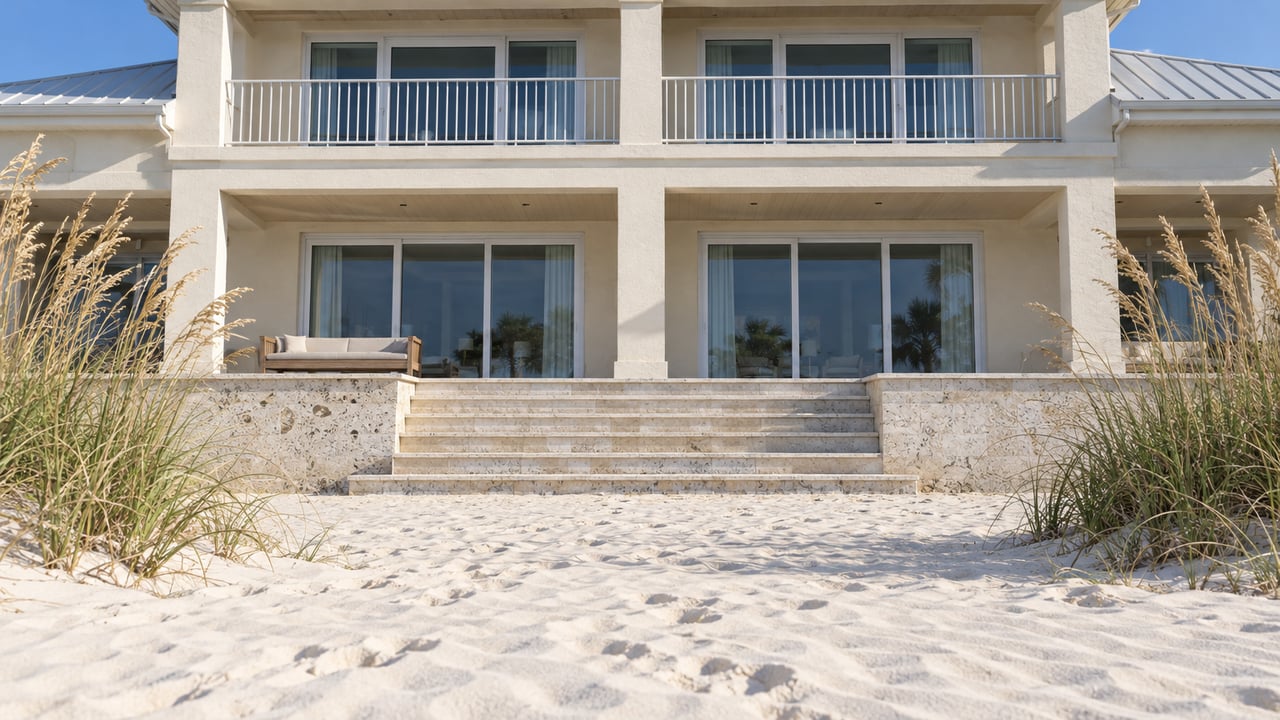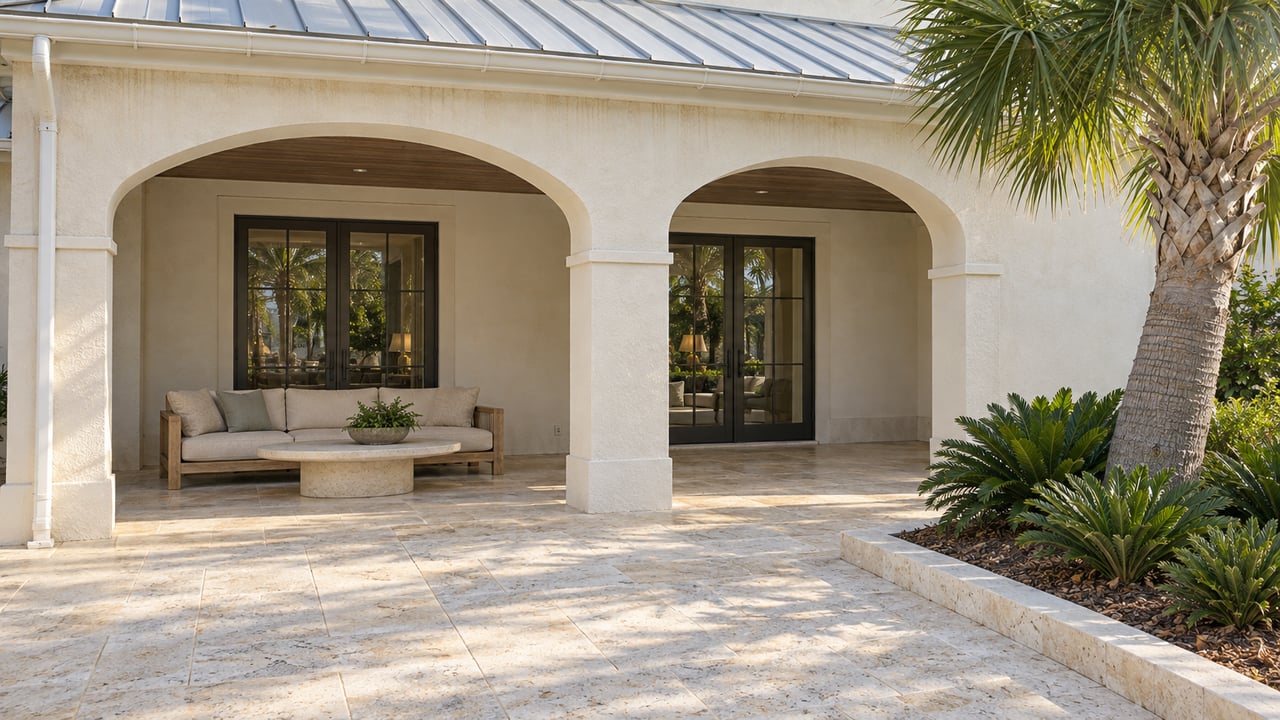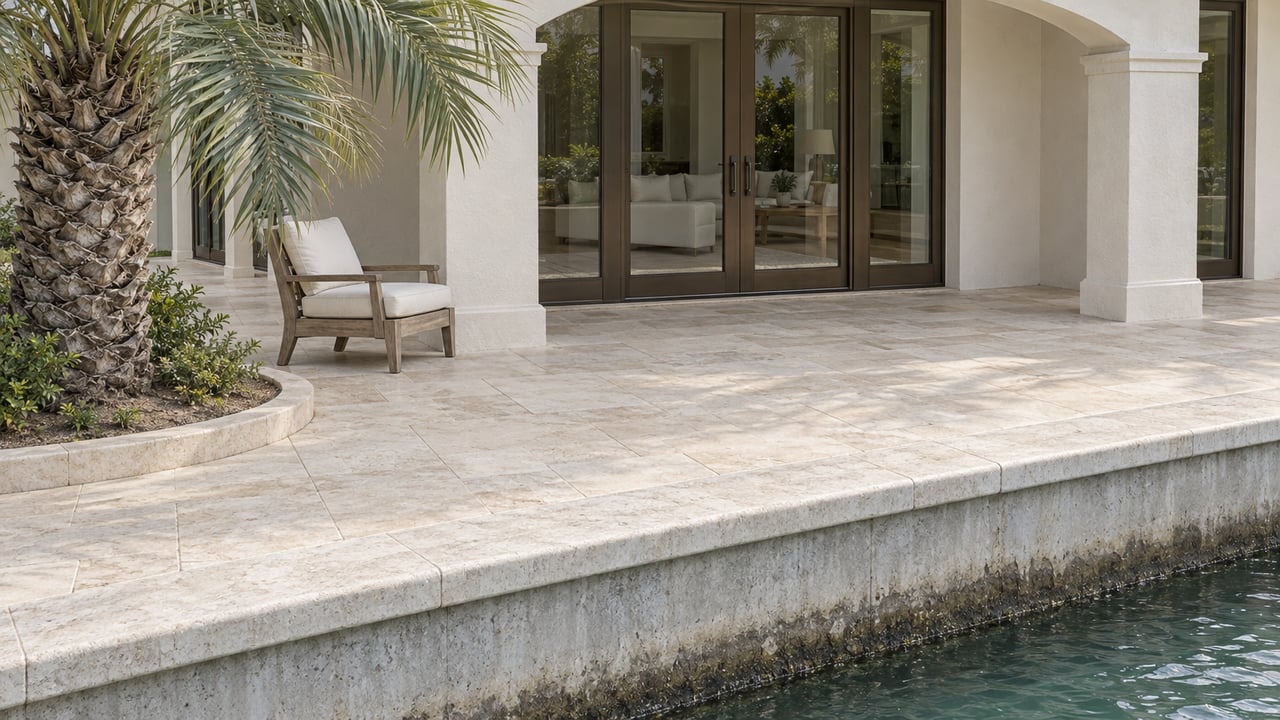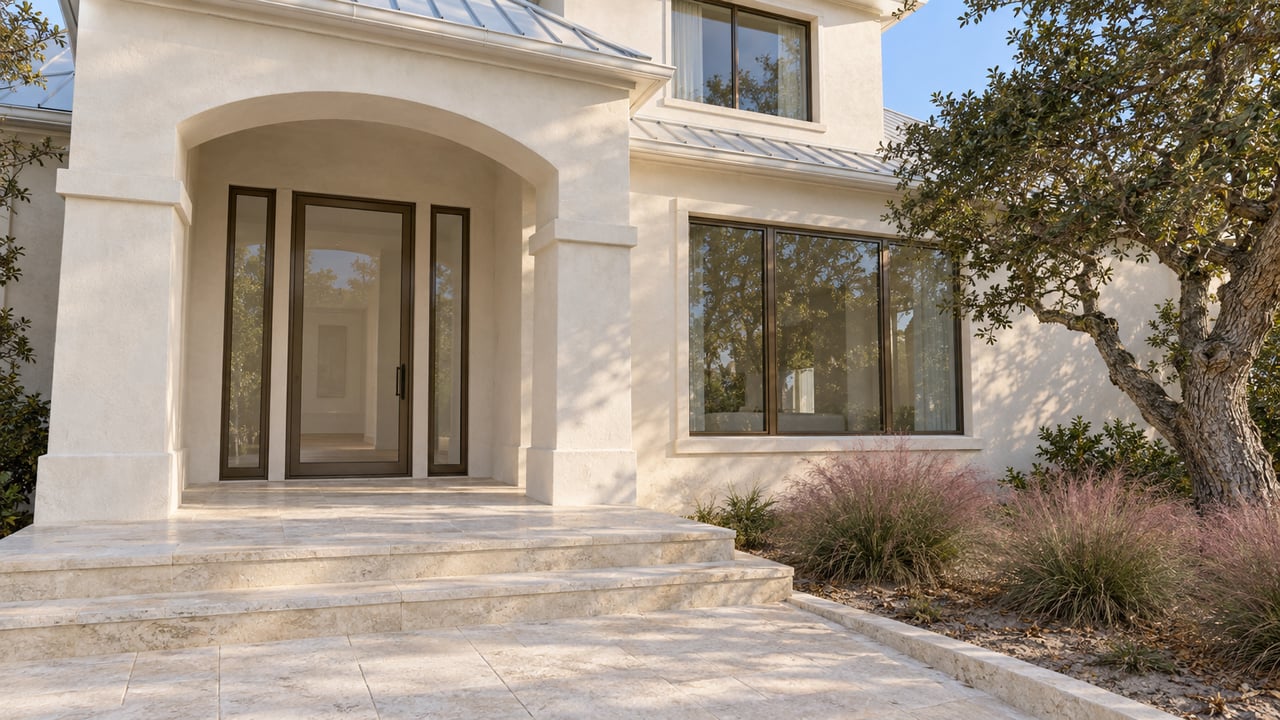
Picture a lakefront lot on one of the coastal dune lakes off west County Road 30A. Measure 300 feet inland from the lake's high-water line. Walton County treats everything inside that line as the Coastal Dune Lake Protection Zone, and nearly every question about what you can build on that lot gets answered there.
Two lots on the same lake can look alike in listing photos and still carry very different building envelopes. The difference usually comes from what the county's Land Development Code says about the lot's age and depth, more than from its frontage, its view or its square footage. A buyer weighing a dune-lake home along this part of 30A is really buying a set of rules, and those rules can be read before the offer goes in.
The Date the Lot Was Created Moves the Setback
Section 4.02.03(H) of Walton County's Land Development Code, Chapter 4 bars construction, disturbance and native-vegetation clearing within 100 feet of a coastal dune lake's ordinary or mean high-water line. Then comes an exception. For lots of record created before November 7, 1996, that run 200 feet deep or less, the shoreline setback drops to 25 feet or 25 percent of the lot's depth, whichever is greater.
Here is how that works out on a few example lots, using the code's own formula:
| Lot depth | Created before Nov. 7, 1996 | Created on or after Nov. 7, 1996 |
|---|---|---|
| 100 feet | 25-foot setback | 100-foot setback |
| 150 feet | 37.5-foot setback | 100-foot setback |
| 200 feet | 50-foot setback | 100-foot setback |
| 250 feet | 100-foot setback | 100-foot setback |
On a 150-foot-deep lot, the date it was created decides whether the house can start 37.5 feet from the water or has to stay back 100 feet, which leaves 50 feet of usable depth. The 250-foot row shows where the exception ends: once a lot runs deeper than 200 feet, its creation date stops mattering. When you compare two lakefront parcels, the plat date belongs on the same worksheet as the price per foot of frontage.
Even within the setback, a few things are still allowed. Boardwalks, docks and other shoreline access structures are permitted there, along with a single cleared path to the shoreline no wider than 10 feet and running perpendicular to it. All other existing native vegetation in the setback has to stay.
A Shallow Lot Sits Entirely Inside the Zone
The setback is only the first limit. Section 4.02.03(F) requires all new development and redevelopment to keep at least 60 percent of the part of the parcel inside the 300-foot zone as pervious surface. Clearing of native vegetation can't exceed 50 percent of that in-zone area.
Put that next to the table above. Any lot shallower than 300 feet sits entirely inside the protection zone, so the 40 percent impervious ceiling applies to the whole parcel. That ceiling covers the house, the driveway and any hardscape together. An older, shallow lot gains buildable depth from the reduced setback, but it still works under the same percentage cap as every other lot in the zone.
Owners can ask for hardship relief from those percentages through the Zoning Board of Adjustment. The code caps that relief as well. No variance can push combined clearing and impervious area past 53 percent of the in-zone portion of the parcel. So even when a variance is granted, the cleared and impervious area together has a fixed ceiling, set in the code.
Any clearing inside the zone needs a county Land Clearing Permit first, and any required replanting has to use native vegetation suited to a dune lake ecosystem. Owners who want to pull out invasive plants along the shore face one more step. The county's 2026 lake-management matrix says riparian owners may remove exotic or invasive species only with authorization from the Florida Fish and Wildlife Conservation Commission.
The Shoreline Stays Soft
On a bayfront or canal lot elsewhere on the Emerald Coast, a buyer might plan around a seawall. On a coastal dune lake, Section 4.02.03(D) prohibits seawalls, bulkheads, revetments and riprap. Lots next to a lake's natural outlet carry a stricter limit. No construction or disturbance is allowed in the outlet itself, and at least 50 feet of vegetation has to stay undisturbed on each side of it.
So the edge you see on a showing is, by code, the edge you keep. A lakefront price here pays for a protected shoreline and a right of access to it. It does not buy a waterline you can engineer.
A Dock Takes Several Permissions
A dock is one of the few structures the setback allows, and it can involve several agencies:
- State exemption by size. Florida Statutes §403.813(1)(b) exempts a single private, pile-supported recreational dock from state permitting if it stays at or under 1,000 square feet, or 500 square feet in an Outstanding Florida Water, and meets the statute's other conditions. The exemption doesn't override local controls or the rules for using state-owned submerged lands.
- Which water you're on. Walton County's coastal dune lake dock brochure notes that Lake Powell is the only dune lake designated an Outstanding Florida Water in full. The portions of lakes inside state parks, including Topsail Hill Preserve State Park, carry the same designation.
- Bigger docks. The Florida Department of Environmental Protection's dock permitting guide lists a general permit for qualifying docks up to 2,000 square feet and an individual permit for docks outside those criteria.
- The federal letter. The county brochure says every dock on a coastal dune lake, whatever its size, requires a Letter of Permission from the U.S. Army Corps of Engineers.
- The lights. Under the dock lighting provisions the brochure cites, dock lights go off after 10:00 p.m. or when not in active use. Security lighting runs on motion sensors with a five-minute shutoff.
The brochure also recommends keeping docks narrow, typically three to four feet wide, raising them at least five feet above mean high water, and leaving plank gaps of half an inch to an inch. If an existing dock is part of what drew you to a property, ask for its permit and authorization history along with the inspection report.
Two Dune Allen Lakes Have No Private Shoreline
The lakes near Dune Allen don't all offer the same kind of ownership. The county's dune lakes site describes Morris Lake as lying within Topsail Hill Preserve State Park, reached by the Morris Lake Trail. It describes Campbell Lake, including its watershed and outfall, as entirely within protected state land at Topsail Hill, with no boat launch. For buyers, those two lakes are places to paddle or walk to. Nobody can buy frontage on them.
Private frontage is on the other lakes, and at least one community near the Dune Allen and Blue Mountain line chose to share it. Draper Lake Coastal Village describes itself as a 96-lot gated neighborhood whose land within the first 100 feet of the lake is protected from development. Residents reach the water by trails and community boat houses instead of private shorelines. Nearby, the Old Florida Beach homeowners association describes its community as next to Draper Lake, with a community dock. Along with the private-lot rules above, these communities show the trade-offs a dune-lake buyer is choosing among: a private shoreline under county limits, shared lake access set by an HOA, or a lake that is entirely parkland.
Why These Rules Got Harder to Change in 2026
On March 24, 2026, the Walton County Board of County Commissioners voted 5-0 to adopt Ordinance 2026-04 amending Section 4.02.03, according to the meeting minutes. The ordinance added protections for the Eastern Lake outfall and made any further change to the section require a supermajority vote. The county's ordinance language sets that supermajority at four votes of the board. At the same meeting, commissioners voted 5-0 to impose a moratorium on developing the county-owned Eastern Lake outfall parcels while they looked for a partner to hold a possible conservation easement.
Eastern Lake sits east of Dune Allen, but the supermajority requirement covers the whole section, including the setbacks, pervious-surface percentages and seawall ban described above. For a buyer, that is a durability signal. The building envelope you underwrite today is harder to loosen, and the protected shoreline across the water is harder to change for a neighbor too.
The county's commitment shows up on the calendar as well. The board approved a resolution naming November 2 through 6, 2026, as Coastal Dune Lake Week. The Coastal Dune Lakes Advisory Board plans community education, lake cleanups, tours and restoration activities that week. That falls in the first week of November, and it's a timely chance for a prospective lakefront buyer to see these lakes up close. Year-round, the Choctawhatchee Basin Alliance collects monthly water samples through Florida LAKEWATCH, according to the county's lake-management matrix.
The county PDF quoted here is marked revised August 25, 2022, and the online code at Municode shows supplements through Ordinance 2026-09, adopted June 9, 2026. Before you rely on any figure for a specific parcel, check the current code and the county's planning staff.
A Few Questions Lakefront Buyers Ask
If a lakefront home is badly damaged, can it be rebuilt? Section 4.02.03(K) lets an owner rebuild a single-family home that is more than 50 percent destroyed to its previous footprint. If the house moves, the new location has to avoid encroaching on the lake setback and buffer to the extent possible.
Does a renovation affect the septic system? It can. For lots next to a coastal dune lake, new development, and any redevelopment that requires modifying, replacing or upgrading an onsite septic system, must connect to central sewer. New septic systems are barred inside the zone where sewer is available. Where it isn't, drainfields must sit at least 100 feet from the high-water line. Ask the utility provider whether a specific parcel has service.
Do the rules change the landscaping plan? Yes. Any replanting the county requires inside the zone has to be native vegetation suited to a dune lake ecosystem.
This post is general information about published county and state rules, not legal, tax or financial advice. Confirm your own parcel's situation with Walton County, the Florida Department of Environmental Protection, the Army Corps of Engineers or a qualified professional.
If a Dune Allen lakefront lot is on your shortlist, The Justin Myers Team can help you put the plat date, lot depth, dock history and financing on one page before you write an offer, and help line up the county, state and federal records to request during your due diligence.